Christ our King
Today, as we celebrate the Solemnity of Jesus Christ, King of the Universe, I put together several reflections and questions that came to mind. With the help of ChatGPT, I arrived at clearer and more beautiful answers — especially in points 3 and 4.
1. Kingship Reimagined: David and Jesus
The readings today present two images of kingship. In the Old Testament, the people recall David—victorious, strong, strategic, a king who led battles and secured triumphs. This is the kingship Israel expected: a ruler who would dominate enemies and restore political glory.
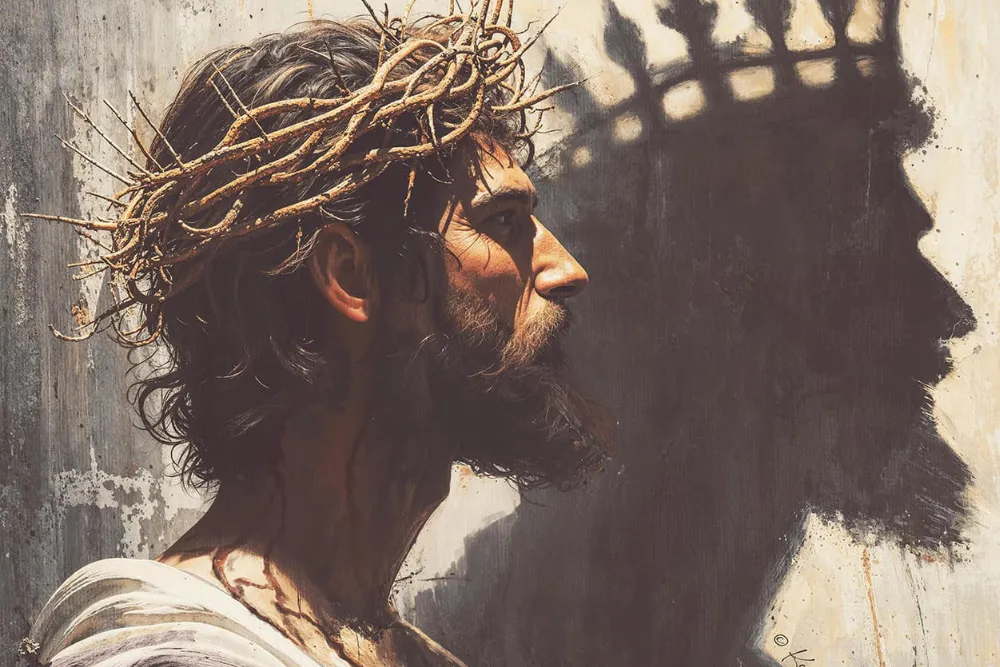
Jesus, however, does not fit that expectation. His kingship is not marked by military triumph or earthly power. Instead, He reigns from a cross. This contrast explains why many could not accept Him: He was not the king they imagined or wanted. Yet His kingship is greater because it transforms the human heart, not merely circumstances.
2. The Banquet of the Eucharist: Paradise Already Offered
Before communion, the Church proclaims that God invites His people to a banquet — a meal prepared by the King Himself. We hear this every Sunday, yet routine often buries the meaning. The Eucharist is not just an obligation; it is an encounter with Jesus, who offers His very self as food.
Here is where Dimas becomes a powerful example. The good thief simply said: “Jesus, remember me when You come into Your kingdom.” In response, Jesus promised: “Today you will be with me in paradise.”
In the Eucharist, Jesus does something similar. He brings paradise near, not as a distant dream but as a present reality. Every Mass is an invitation like the one Jesus offered Dimas: humble yourself, believe, and receive the King who gives eternal life.
3. Did Jesus Really Need to Die?
The question arises naturally: Could God not have made people good without the Cross? Would humanity not behave better if Jesus never died and remained physically here on earth?
Scripture gives a consistent pattern: Even when God revealed Himself—through prophets, miracles, covenants—people still turned to idols, complained, and resisted Him. The problem was not God’s presence but the condition of the human heart.
Jesus’ death was not merely a dramatic event; it was the definitive act of love that penetrates the hardness of human nature.
The Cross:
- reconciles humanity with God,
- reveals the depth of divine love,
- defeats sin and death,
- and gives freedom rooted in mercy rather than force.
The Catechism affirms this: the Paschal Mystery — the Passion, death, and Resurrection — is the center of salvation history (CCC 571–618). Without the Cross, Christianity would be moral philosophy, not redemption.
4. Would the World Be Better if Jesus Were Still Physically Here?
It’s tempting to imagine that if Jesus remained on earth, people would be less angry, less selfish, and more faithful. But history suggests otherwise. God revealed Himself repeatedly to Israel, yet idolatry, envy, and rebellion persisted.
Human behavior is not fixed merely by proximity to holiness.
Even when Jesus walked among people, some loved Him, some ignored Him, and some crucified Him.
This shows that the transformation Christ desires is not imposed externally; it must be received internally.
5. What Kind of King Do We Acknowledge Today?
The final question is simple but piercing: Who is king in our life?
Not in a personal emotional sense, but in the practical sense of “Who or what rules our priorities?”
For many, it may be:
- money,
- ambition,
- comfort,
- another person,
- or self-centered desires.
A king is a ruler — one who directs and sets the order. Jesus’ kingship is unique because He rules through love, not force. His authority heals rather than coerces. His power uplifts rather than dominates. His command leads to freedom rather than fear.
Recognizing Jesus as King today means allowing His truth, mercy, and way of life to shape our decisions and values.