What Remains
For a long time, I believed that my value was tied to my usefulness.
I felt most alive when I was consulted, when my opinion mattered, when someone needed my help. Whether in relationships, ministry, or work, I drew a quiet sense of worth from being needed. I thought that if people relied on me, then I mattered. If I was busy, productive, and contributing, then my life had value.
I did not realize how deeply this belief shaped me.
In an earlier reflection, “Dili Nako,” I wrote about letting go of the identity I wore like armor—the responsible one, the dependable one, the person who always said yes. Looking back, I see that it was not only an identity. It was a survival strategy.
Some of us grow up carrying wounds of neglect, abandonment, or feeling unseen. We learn early that attention must be earned. Love must be deserved. Importance must be proven.
So, we work.
We volunteer.
We say yes.
We carry responsibilities that are not ours.
We become indispensable because somewhere deep inside us, we are terrified of becoming invisible.
I know this because I have lived it.
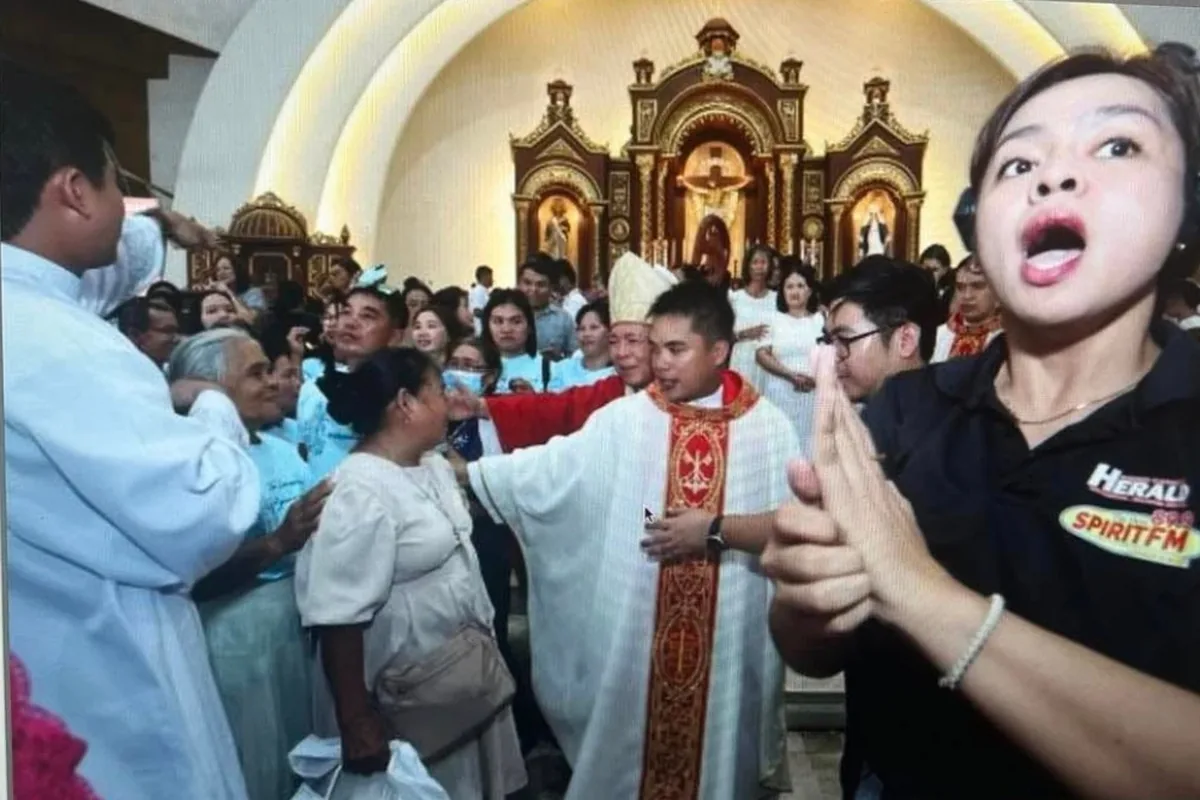
When I was working at Davao Catholic Herald, I accepted every opportunity that came my way. I became a social media head, radio anchor, live events host, Associate Editor, volunteer coordinator, and many other things in between. I genuinely loved the work. I loved serving the Church. I loved learning.
But if I am completely honest, I also loved feeling needed.
Every new responsibility felt like affirmation.
Every task felt like proof that I mattered.
Every request felt like evidence that I had value.
Then one day, a workmate told me that someone had commented “dili mana siya kamao musulat” (“She doesn’t know how to write.”). Whether it was a misunderstanding or simply a difference in opinion, the comment struck me harder than it should have.
I immediately called her and asked if that was truly how she felt. If it was, I told her to teach me how to improve.
What surprised me was not the comment itself.
What surprised me was how deeply it hurt.
Later, I sat with the discomfort and asked myself why.
Why was I so affected?
Why did one opinion shake me so much?
The answer was uncomfortable.
I had tied my identity to my work.
I was giving my whole heart to what I did, and somewhere along the way, I had begun to believe that if my work was not valuable, then perhaps I was not valuable either.
Beneath that fear was an even deeper question:
If I lose this role, who am I?
If I am not the editor, the trainer, the writer, the volunteer, the coordinator, the helper—who am I?
I do not have a husband.
I do not have children.
I do not have the roles society often uses to define a person.
So who am I then?
That question has followed me for months.
During a recent training session I conducted on professionalism, I found myself reminding participants that work is only one part of a person’s life. I encouraged them to rest, pursue hobbies, spend time with people they love, and care for themselves beyond the demands of their jobs. As the words left my mouth, I realized how little of that advice I had taken myself. For years, I had measured my worth by my usefulness. Perhaps that was why criticism felt devastating. If my value came from what I produced, then any challenge to my work felt like a challenge to my identity.
As I repeated these lessons to others, I realized that perhaps I needed to hear them myself.
Perhaps my value was never meant to come from how much I produce.
Perhaps my worth was never supposed to depend on how many people need me.
Perhaps God was inviting me to discover something simpler and far more difficult:
That I am valuable even when I am resting.
That I am worthy even when I am unnoticed.
That I am loved even when I am doing nothing at all.
Scripture reminds us:
“Be still, and know that I am God.” (Psalm 46:10)
Stillness is difficult for those of us who have spent our lives proving ourselves.
When productivity becomes identity, rest can feel like failure.
When usefulness becomes worth, silence can feel threatening.
But God continually calls us back to a deeper truth.
Before we ever accomplished anything, He loved us.
Before we ever served anyone, He chose us.
Before we ever became useful, we were already His.
I am slowly learning that my existence speaks of value long before my accomplishments ever do.
The work matters.
Service matters.
Excellence matters.
But they are terrible foundations for identity.
Jobs change.
Roles end.
People move on.
Titles disappear.
What remains is who we are before God.
Not what we do.
Not what we produce.
Not what we achieve.
Just who we are.