Confessing Without Repentance
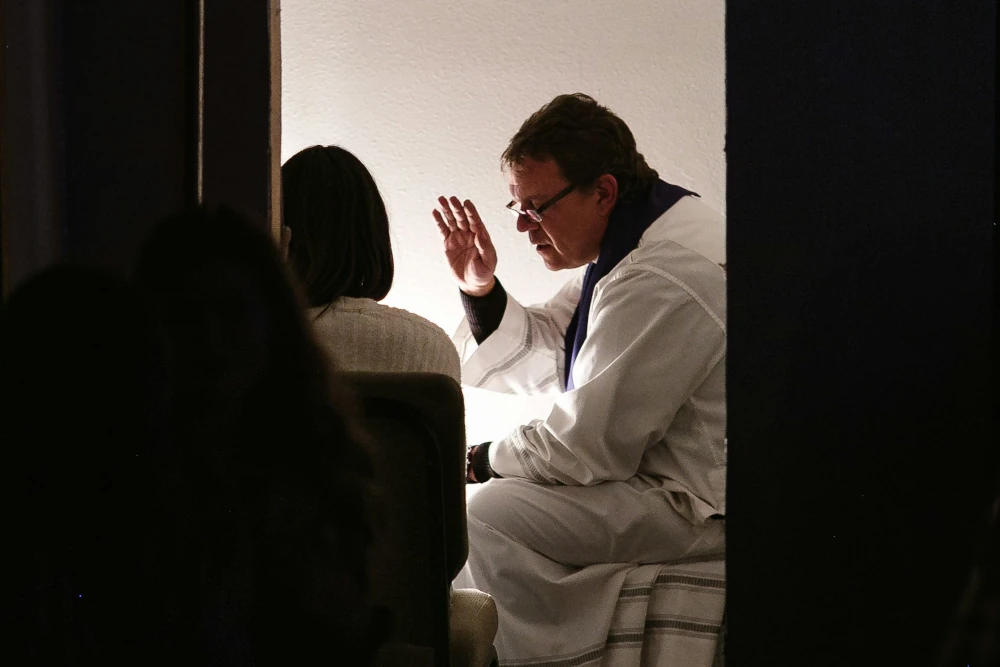
I have been pondering lately the nature of my confessions. Have they truly been acts of contrition, or have they become rituals I follow merely to be absolved—without a genuine desire to change?
Some of us, if not all, may be guilty of this: seeking the Sacrament of Reconciliation not necessarily to reconcile with God, others, or even ourselves, but simply to be relieved of guilt. It becomes a routine, a spiritual reset button that we press to clear our conscience, though our hearts remain unmoved. We say the words, we perform the act, but we walk away unchanged.
What does the Church say about this?
The Catechism of the Catholic Church reminds us that “among the penitent’s acts contrition occupies first place. Contrition is ‘sorrow of the soul and detestation for the sin committed, together with the resolution not to sin again’” (CCC 1451). The sacrament is not merely about receiving forgiveness but also about true repentance—turning away from sin and turning back to God.
Pope St. John Paul II, in his Apostolic Exhortation Reconciliatio et Paenitentia (1984), laments that “in current practice the sacrament of Penance has lost something of its force. Many Christians—although they participate in the Eucharist—rarely approach the sacrament of Reconciliation, and many confess without true repentance, out of habit or social pressure.” He underscores the importance of metanoia, a sincere and radical conversion of the heart.
It’s troubling when we confess not out of a desire for transformation, but simply because we think we should. Sometimes, I catch myself saying to the priest, “I don’t even feel sorry.” There are moments when I confess only because someone was hurt by my actions, even though I sincerely believe I did no wrong. Is that confession valid?
Theologian Henri Nouwen once wrote, “Forgiveness is the name of love practiced among people who love poorly.” Perhaps our desire for forgiveness, even when not fully repentant, is still a longing for love—to love God and others better, even though we are not yet capable of doing so fully. But love, in its most authentic form, requires honesty and the willingness to be changed.
It is also humbling to realize that I cannot change myself. I’ve learned—and am still learning—that transformation is not something I can will into existence. It is a grace. As Pope Francis beautifully puts it, “The Lord never tires of forgiving. It is we who tire of asking for forgiveness” (Evangelii Gaudium, 3). But he also emphasizes the need for “a sincere desire to reform one’s life.”
So what should we do when repentance feels absent?
- Be honest with God. St. Augustine says, “The confession of evil works is the beginning of good works.” Admit to God in prayer—even within the confessional—if your heart is not yet fully moved. Grace begins in truth.
- Pray for the desire to repent. Even if we cannot yet detest our sins, we can ask God to plant the seed of conversion.
- Approach the sacrament humbly. The Sacrament of Reconciliation is not a transaction. It is an encounter with Divine Mercy. Like the prodigal son, even the smallest step home is met with a Father running toward us.
Let us be reminded: the sacrament is not about how we feel; it’s about the direction we are willing to face. God sees not only the act of confession, but the orientation of our hearts.
May we not settle for being cleansed of guilt alone. May we allow God’s mercy to move us into deeper conversion, even when the first step is simply admitting that we are not yet ready to change.