The Beauty of Brokenness in the Church
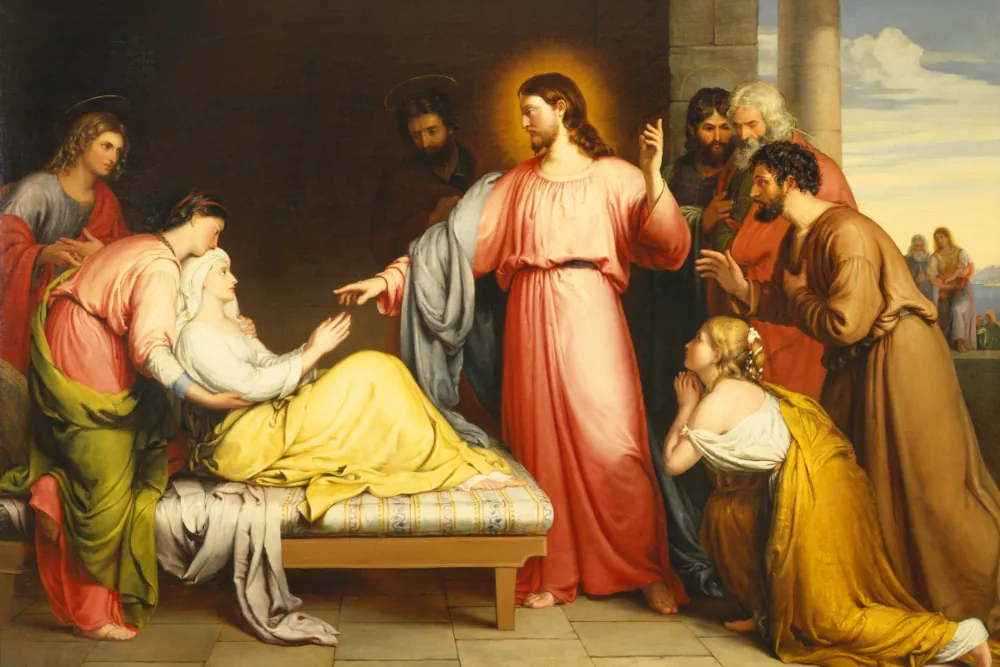
“It is not the healthy who need a doctor, but the sick.” – Luke 5:31
“The Church is called to be the house of the Father, with doors always wide open.” – Evangelii Gaudium, 47
The image of the Church as a hospital has long captured my imagination. Unlike a stage, which demands perfection, poise, and performance, a hospital exists to receive the broken, the weak, the vulnerable. In my years of working for a local Catholic newspaper and serving alongside parishes, I have encountered this truth in ways both humbling and beautiful.
One of the most heart-stirring realities I’ve observed is the presence of individuals with special needs—those who carry visible or invisible struggles—who find a home in our local churches. They are not merely attendees; they are active participants in the life of the Church. Some sing in choirs. Some help with fundraising. Many attend Mass with unwavering devotion. Others, with radiant joy, simply showing up for parish fiestas and solemnities with the kind of excitement that reminds us all what celebration truly is.
This article is not written to label or limit. It is not to romanticize pain or simplify complexity. It is, rather, a testimony—an expression of awe at how God calls each person in a uniquely loving and purposeful way, especially those whom society often overlooks or underestimates.
It stirs my heart to see them feel safe within church walls. The reverence of the liturgy, the rhythm of tradition, and the presence of community offer something the world often withholds: a sense of being seen, included, and loved.
In a society that often marginalizes those with disabilities or mental health struggles, the Church becomes a countercultural sanctuary. Here, no one is too difficult, too slow, too different. There is a seat for everyone at the table of the Lord.
These members of our Church family may be challenging to understand or relate to at times. Their way of expressing faith may differ from what is expected. Yet their faith endures. They stay. They keep coming back. They participate. They belong. In fact, they often remain longer and serve more faithfully than those who are considered “mentally well.”
What a paradox—and what a grace.
The Catechism reminds us that every person, regardless of ability or state, is made in the image and likeness of God (CCC 1701). This theological truth becomes a lived reality in parishes where individuals with special needs are not only tolerated but treasured.
There is something profoundly prophetic in the quiet witness of these parishioners. In their authenticity, their prayers, their presence—they teach the rest of us about what it means to be poor in spirit, meek, and merciful.
Some of them, in their simplicity, grasp the joy of the Gospel more fully than we do. As Pope Francis reminds us in Evangelii Gaudium (The Joy of the Gospel), the Church is not a tollhouse; it is the Father’s house, where all are welcome—especially those who suffer.
Modern culture often pressures us to curate our lives—to project confidence and capability. But the Church is called to be a place where wounds are not hidden but healed.
When we witness people with psychological difficulties or emotional struggles show up week after week to Mass, even when they are ignored or misunderstood, we see a living theology. Their perseverance is sacramental—it reveals something holy.
The Church is not only a hospital—it is also a school of love. And love means presence. It means listening. It means letting go of our judgments and embracing the other, even when it is uncomfortable.
As one priest once told me, “In every parish, there are quiet saints. They may not speak much, but they are the first to arrive at church and the last to leave. Some of them are wounded. But their wounds are precisely what make them beautiful.”
A Call to Inclusion
Inclusion is not merely a pastoral strategy—it is a Gospel imperative. As a local Church, we are called to foster spaces where people with disabilities are not just passive recipients of mercy but co-creators of mission.
We need to train volunteers to be patient and present. We need to open our liturgies and programs to diverse expressions of faith. We need to preach not only with our words but with our welcome.
True evangelization happens when someone with a wounded heart walks into our church, and instead of feeling judged, they feel embraced.
Is this not the very heart of Luke 5:31? Jesus does not seek the well-adjusted, the well-dressed, or the well-behaved. He seeks the sick. And He calls them—not once, not twice, but every day—to Himself.
The Church has always stood with those on the margins. Jesus began His public ministry not in power centers, but among fishermen, tax collectors, and the demon-possessed. He dined with the unclean and touched the untouchable.
Today, that legacy continues. When a parishioner with schizophrenia dances at a parish fiesta, or a young man with autism chants along with the psalmist, or an elderly woman with dementia clutches her rosary and murmurs “Amen” out of rhythm—WE ARE WITNESSING SACRED MOMENTS.
These people are not distractions. They are disciples.
They remind us that our value does not lie in our productivity or perfection, but in our identity as God’s beloved children.
If the Church is a hospital, then let us be good nurses. Let us bind wounds with patience, feed the soul with sacraments, and hold the hand of those who need it most.
Let us resist the temptation to turn our parishes into stages for performance or competition. Let us instead embrace the messy, beautiful, and healing work of community.
For in doing so, we not only serve those who are visibly wounded—we allow our own invisible wounds to be healed as well.