The Necessity of Discomfort

Lately, I’ve been thinking about how pain, as unwelcome as it feels, often becomes the very thing that saves us. It doesn’t always arrive as punishment—sometimes it comes as permission. Permission to pause. Permission to rebuild. Permission to begin again.
Beneath its sharp edges lies a paradox: pain is not merely a sign of brokenness; it is often the very doorway to healing. Both science and faith, in their own languages, whisper the same truth—that growth rarely happens in comfort, and renewal often begins where it hurts.
The Biological Signal: Pain as Regeneration
In biology, pain is the body’s way of calling attention to what needs repair. It is not cruelty, but care—a signal that something within us seeks restoration. The principle of hormesis explains how controlled stress can make the body stronger. Muscles torn during exercise heal with greater strength. Fasting triggers autophagy, a process that allows cells to clear out damaged parts and renew themselves. Even a massage that presses into sore spots causes brief discomfort only to improve circulation and release tension later on. In each of these, pain becomes not destruction but regeneration. The temporary suffering allows the body to rebuild, adapt, and thrive. Pain is a sign of healing at work.
The Psychological Pathway
Emotional pain follows a similar pattern. In psychology, there is a phenomenon known as post-traumatic growth. People who endure deep sorrow, loss, or failure often emerge with a renewed sense of purpose, empathy, and wisdom. Their perspectives widen. Their faith deepens. Their capacity to love grows.
Resilience, too, is born of adversity. Just as the immune system strengthens after exposure, the mind learns to adapt after surviving hardship. Pain, then, is not the end of peace—it is its teacher.
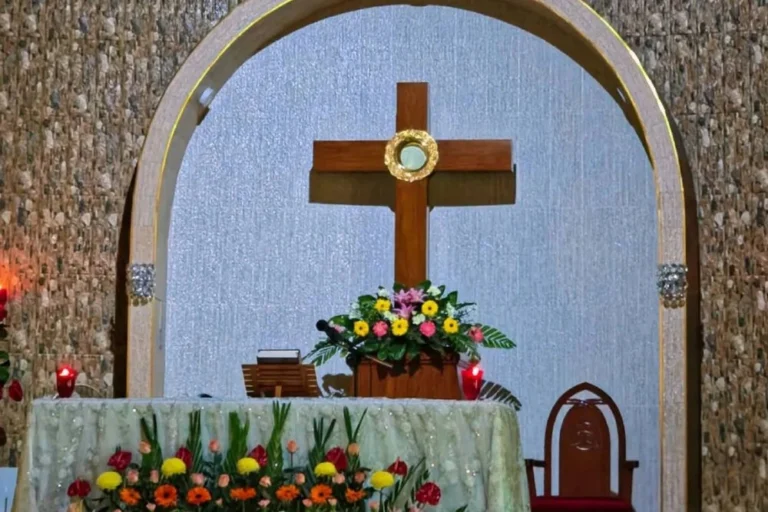
Christian spirituality sees suffering not as meaningless, but as transformative. The Cross, the ultimate symbol of pain, becomes the place of redemption. Through Christ’s wounds came resurrection. “When I am weak, then I am strong,” wrote St. Paul (2 Cor 12:10).
Suffering purifies the heart, stripping away illusions of control and pride. It humbles the soul and opens it to grace. In the silence of anguish, one learns to listen—not to the noise of the world, but to the gentle voice of God whispering through the cracks.
To suffer, then, is not to be forsaken. It is to be invited into a deeper participation in the mystery of love—a love that heals by wounding, renews by breaking, and raises by humbling.
The Necessary Realization: Discomfort is the Path
It is only now that I have come to this crucial realization: life is meant to go through pain. We have a natural human impulse to evade discomfort, to seek the path of least resistance. But if we perpetually dodge the sting, we will never grow. We won’t truly heal. We won’t get to our strongest, truest selves.
Discomfort is necessary. It is the grit that polishes the stone.
The secret is not in escaping pain, but in changing our relationship with it. We must look at what pains us, feel it fully, and refuse to let it define us as victims. Instead, we use the lessons embedded within the ache to outgrow it, transforming the hurt into our inspiration, our drive, and our motivation.
Life is definitively better once we’ve experienced and processed pain. When we face our wounds head-on, they become scars that testify not to destruction, but to victory and resilience.
A Quiet Promise
Whether in the body, mind, or spirit, the pattern remains the same: pain is not the enemy. It is the refining fire through which something new is born. The tear in a muscle, the crack in a heart, the wound in a soul—all become openings where light can enter.
To live, then, is not to escape pain, but to understand and embrace it—to see in its sting the beginning of strength, and in its ache the quiet promise of resurrection.
We mistake comfort for peace. But God often works in the uncomfortable—in the breaking, the letting go, the humbling. Pain, in the spiritual life, can be a kind of purification. It empties us of pride and makes room for grace. It reminds us that we are not self-sufficient, that healing does not come from control but from surrender.
So maybe when pain comes—in the body, in the heart, or in the spirit—we can see it differently. Not as God’s absence, but as His nearness. Not as an ending, but as a beginning. Because through every ache, something is being strengthened, refined, and made new.
Perhaps that’s the quiet promise hidden in every hurt: that we are not being undone, but being remade.